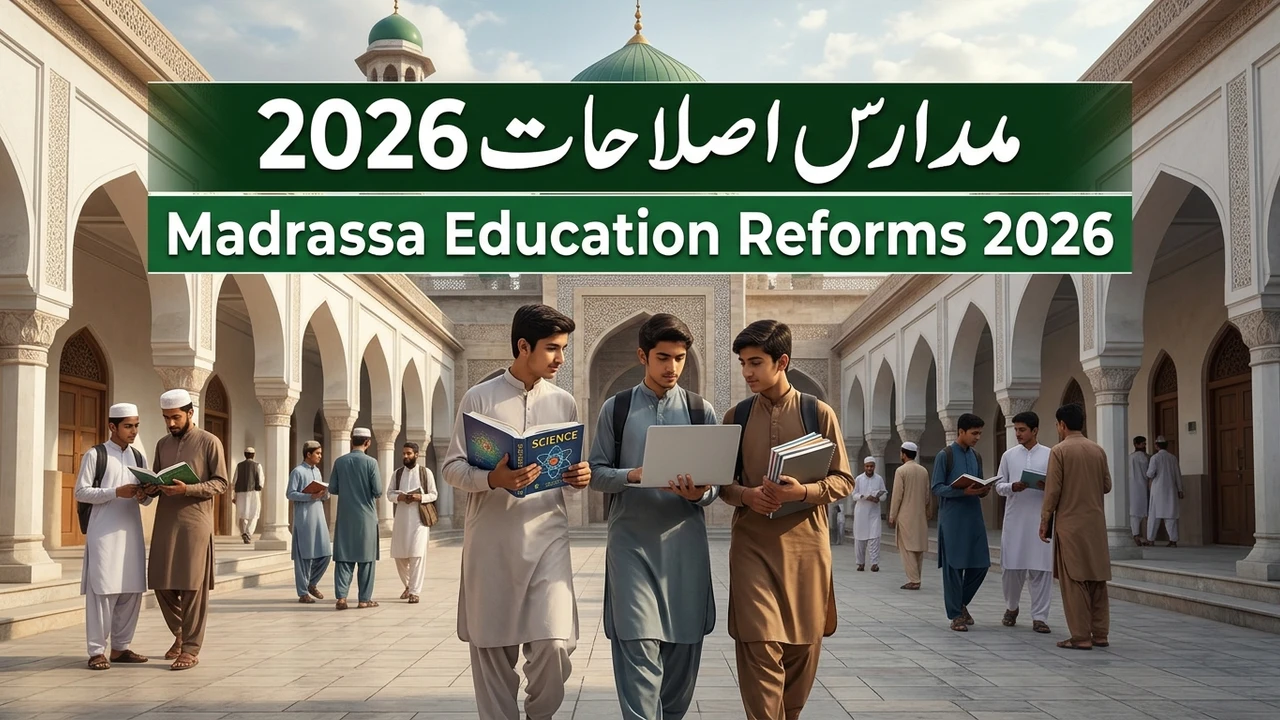
Pakistan’s madrassa federations have taken a step toward a shared vision for religious education. The Muttahida Madaris Council Pakistan — a joint platform of the country’s main madrassa federations — met in Islamabad and agreed in principle on an integrated madrassa system that brings modern sciences and technology alongside traditional religious education, while expanding opportunities for female students. The meeting, reported on 13 November 2026, ended with agreement on closer cooperation among the federations, but it did not announce a new curriculum, a new syllabus, or any deadline. The honest picture is this: the federations have agreed on a direction, not on a decision.
What happened at the Islamabad meeting?
The meeting brought together leaders of the major madrassa federations under the banner of the Muttahida Madaris Council Pakistan. Among those who attended were Hafiz Muhammad Tahir Mehmood Ashrafi of Wafaq-ul-Madaris, Allama Dr. Mehr Asif Akbar of Nizam-ul-Madaris, and Maulana Muhammad Zubair Faheem of Ittehad-ul-Madaris Al-Arabia, along with other federation leaders. They discussed how religious education and modern subjects can be taught together, how female students can get better access to both religious and contemporary education, and how the federations can coordinate more closely on examinations, certifications, registration and administration. Participants expressed their resolve to strengthen cooperation and work on a joint strategy.
Read Also: Punjab New School Curriculum 2027: Lighter Textbooks and QR Lessons
Key Details
| Detail | What is confirmed |
|---|---|
| Meeting | Muttahida Madaris Council Pakistan meeting, Islamabad |
| Reported | 13 November 2026 (APP report, republished by TezKhabar) |
| Attendees | Leaders of madrassa federations, including Hafiz Muhammad Tahir Mehmood Ashrafi (Wafaq-ul-Madaris), Allama Dr. Mehr Asif Akbar (Nizam-ul-Madaris), Maulana Muhammad Zubair Faheem (Ittehad-ul-Madaris Al-Arabia) |
| Main idea discussed | An integrated madrassa system combining religious education with modern sciences and technology |
| Girls’ education | Discussed expanding female students’ access to religious and contemporary education, with better facilities and a conducive academic and training environment |
| Coordination | Better coordination on examinations, certifications, registration and administration |
| Government figures appreciated | PM Shehbaz Sharif, COAS Field Marshal Asim Munir and Punjab CM Maryam Nawaz, on madrassa registration, banking access and administrative issues |
| What was decided | Agreement in principle on cooperation and a joint strategy — no new curriculum, syllabus, rule or deadline announced |
What did the Council agree on?
The council agreed on strengthening cooperation among the madrassa federations and working together on a joint strategy for madrassa education. The central idea discussed was an integrated madrassa system — a system in which students continue their religious education while also studying modern sciences and technology. The federations also discussed improving coordination in practical areas that affect students directly: examinations, certifications, registration and administration. Closer coordination would mean students’ certificates and records are handled more smoothly and consistently across the country. The meeting also appreciated the role of Prime Minister Shehbaz Sharif, Chief of Army Staff Field Marshal Asim Munir and Punjab Chief Minister Maryam Nawaz on madrassa registration, banking access and administrative matters, and expressed hope that these processes would be simplified further.
Read Also: Punjab Grade 5 to 8 Assessment Policy 2026: E-Sheet Exams
What was discussed about girls’ education?
One of the topics on the table was expanding opportunities for female students. The council discussed giving girls studying in madaris better access to religious education as well as contemporary education, along with better facilities and a more conducive academic and training environment. This matters because female madrassa students have long had more limited access to modern subjects and facilities than male students. But readers should be clear about what was actually said: the council discussed expanding opportunities for female students. No quota was announced, no new institutions were announced, no enrolment figure was given, and no date was set. The discussion is a signal of intent, not a programme with details yet.
Read Also: Islamabad Schools Free Lunch Programme 2026
What was discussed, and what was NOT decided?
This distinction matters, because headlines about madrassa reform can easily be misunderstood. Here is what the meeting did and did not do.
What was discussed: the promotion of modern sciences and technology alongside religious education; expanding female students’ access to religious and contemporary education with better facilities; better coordination among federations on examinations, certifications, registration and administration; and strengthening cooperation and a joint strategy among the federations. The meeting also appreciated the prime minister, the army chief and the Punjab chief minister for their role on madrassa registration, banking access and administrative issues, and hoped these processes would be simplified further.
What was NOT decided: no new curriculum was announced, and no subject was made compulsory. No specific syllabus was approved, no examination rule was changed, no registration rule or deadline was set, and no government decision or order was issued. This was a meeting of the council of federations, not a government announcement. There is no new law, no new timeline and no new regulation coming out of this meeting. Older stories from 2019 to 2021 about madrassa curriculum changes describe a different time and a different process; they should not be read as if they are this week’s decision.
Madaris Ke Talba Aur Walidain Ke Liye Iska Kya Matlab Hai?
For students currently studying in madaris, nothing changes immediately. Classes, examinations and certificates continue as before, because no new rule has been announced. For parents considering a madrassa for their children, the meeting is a sign that the federations are talking seriously about combining religious education with modern subjects — but it is not yet a promise with a date attached. Parents should not pay anyone who claims to offer admission, registration or certification under a “new madrassa reform” in exchange for money. There is no such new scheme announced at this meeting. The safest approach is to follow the guidance of the madrassa itself and the federation it is affiliated with, and to check any claim about a new rule against an official announcement before acting on it.
Read Also: Punjab New School Curriculum 2027: Lighter Textbooks and QR Lessons
What happens next, and what should students and parents watch for?
What happens next depends on whether the federations turn their agreement in principle into concrete proposals. The things worth watching are straightforward: any formal statement from the Muttahida Madaris Council Pakistan or the individual federations about a syllabus or curriculum; any official announcement from the government about madrassa registration or administration; and any concrete step on examinations or certification that affects students directly. Until such an announcement appears, reports of a “new madrassa curriculum” should be treated with caution. Students and parents should also watch for updates on the registration and banking matters the meeting discussed, since the council expressed hope that those processes would be simplified further — but hope expressed in a meeting is not the same as a change already made.
Read Also: Punjab Grade 5 to 8 Assessment Policy 2026: E-Sheet Exams
Final Words
The Islamabad meeting of the Muttahida Madaris Council Pakistan is best understood as a direction, not a destination. The federations have agreed in principle that madrassa education should include modern sciences and technology, that female students deserve wider opportunities, and that the federations should coordinate better on examinations, certifications, registration and administration. That agreement matters, because it comes from the federations themselves. But no curriculum has been announced, no subject has been made compulsory, and no deadline has been set. Students and parents should welcome the discussion while waiting for the details — and rely only on official announcements for any claim about a new rule. When the council or the government says something concrete, that is when the real change begins.
Disclaimer: Amuoba.pk is an independent news and information website and is NOT an official website of the Government of Pakistan, the Ministry of Education, or any madrassa federation. The information in this article is based on the published report of the Muttahida Madaris Council Pakistan meeting and is provided for general information only. For official announcements, please consult the relevant government or federation channels.